
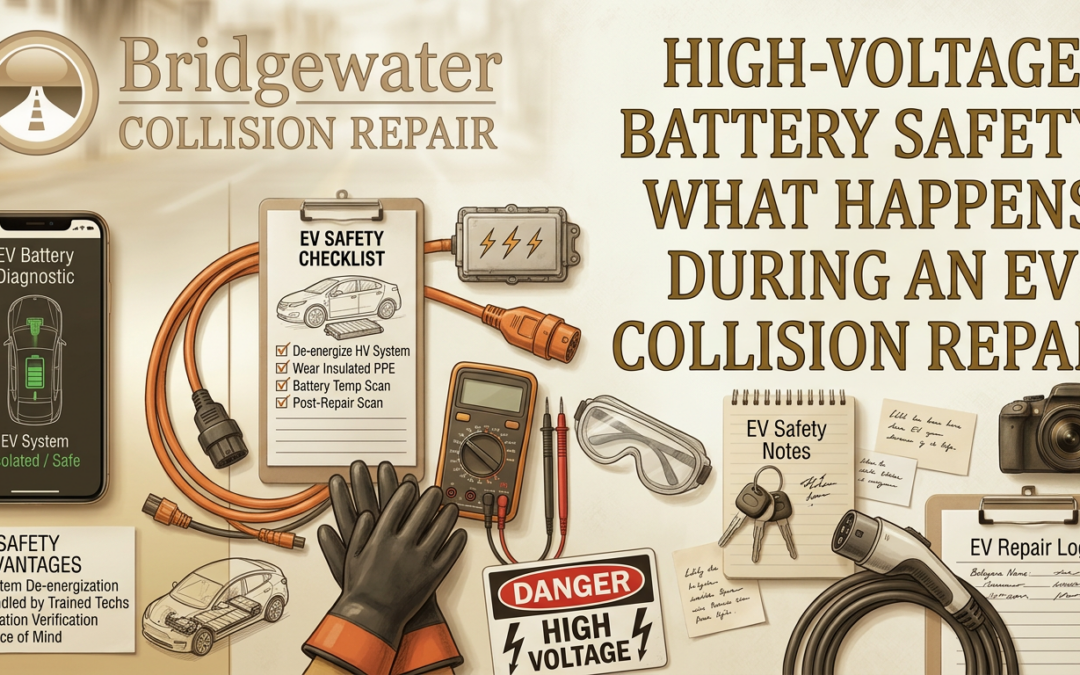
Electric vehicles and plug-in hybrids carry high-voltage battery systems that operate at voltages far beyond what a conventional vehicle’s 12-volt system involves. In a collision repair context, this means that the steps required to safely work on these vehicles differ significantly from what applies to gas-powered cars. The bodywork, frame, and paint processes are largely the same. What is different is everything involved in working around or near the vehicle’s high-voltage electrical system.
Understanding what EV collision repair involves helps you ask the right questions when selecting a repair facility after an accident. The capabilities required are specific and not universally available.
What Makes EV Collision Repair Different From a Conventional Repair?
The central difference is the high-voltage battery system. Fully electric vehicles typically carry battery packs that operate between 400 and 800 volts. Plug-in hybrids operate at lower voltages but still far above the thresholds that require specialized handling. Exposure to these voltage levels creates risks that do not exist in conventional vehicle repair. Technicians who work on EVs must be trained to identify high-voltage components, understand isolation requirements, and follow procedures that protect both the vehicle and the people working on it.
The battery pack itself is a structurally significant component in most EVs. In many designs, the battery is mounted in the vehicle’s floor and contributes to the vehicle’s structural rigidity. This means that collision damage affecting the floor or undercarriage may involve the battery enclosure, and repairs in these areas require coordination between structural repair and high-voltage system management. This is not a task that generalizes from experience with conventional vehicles. Customers who’ve worked with Bridgewater Collision Repair have noted the team’s attention to genuine parts and careful handling on EV repairs, including on multi-panel damage to an Audi e-tron where the outcome was described as exceptional workmanship.
What Can Happen to the Battery System in a Collision?
A collision can affect the battery system in ways that are not visible externally. The battery management system, which monitors cell voltage, temperature, and state of charge, may store fault codes indicating internal damage that occurred during the impact. The battery enclosure may have sustained deformation that compromises its sealing or structural integrity without creating a visible leak or obvious damage from the outside.
Thermal runaway is the most serious battery-related concern in EV collision repair. This is a condition in which a damaged cell generates heat that spreads to adjacent cells, potentially escalating rapidly. It can occur hours or days after an impact in some cases. A proper post-collision assessment of the battery system includes diagnostic evaluation of the battery management system’s data, not just a visual inspection of the enclosure. If there is any indication of internal battery damage, the vehicle should not be driven until a qualified facility has completed a thorough evaluation.
How Is a High-Voltage System Safely Disabled for Repair?
Before any repair work begins on an EV or plug-in hybrid, the high-voltage system must be de-energized following the vehicle manufacturer’s specific procedure. This involves more than simply turning the vehicle off. The process typically includes disconnecting the 12-volt service battery to deactivate the high-voltage system’s control circuits, then following a manufacturer-specific sequence to verify that the system is isolated before any work in the high-voltage circuit area begins.
Verification equipment is used to confirm that the high-voltage system is de-energized before technicians work near those components. The time required for capacitors in the system to discharge varies by manufacturer, and this waiting period must be observed. These are not steps that can be skipped or approximated. The National Highway Traffic Safety Administration has published emergency response guides for hybrid and electric vehicles that outline the risks involved and the technical basis for these procedures.
What Does Structural Repair Look Like When the Battery Is Integrated?
In most modern EV platforms, the battery pack occupies the floor of the vehicle and is bolted to the structural subframe. In some designs, the battery enclosure itself is a structural component that contributes to the vehicle’s rigidity. When a collision damages the floor structure or undercarriage, assessing the repair requires understanding how the battery interacts with those components.
OEM repair documentation is particularly important here. Manufacturers specify which structural sections can be sectioned or replaced, how close to the battery enclosure cuts can be made, and what procedures apply when the battery must be removed to access structural components. A shop that follows OEM repair procedures for EVs is working from the manufacturer’s engineering standards, not adapting techniques that were developed for a different vehicle architecture.
What Should You Ask an EV Repair Facility?
Before authorizing repairs on an EV or plug-in hybrid, ask specifically about the facility’s training and certification for your vehicle’s brand. OEM certification programs for EV manufacturers include requirements around high-voltage safety training, required diagnostic equipment, and documented repair procedures. Ask whether the facility performs a battery system diagnostic as part of the post-collision assessment, not just a visual inspection. Ask whether they can provide calibration and diagnostic documentation for the electronic systems affected by the repair.
For more on how EV collision repair compares to conventional repair and what to look for in a qualified facility, the Electric Vehicle Collision Repair article on this blog covers the topic in more depth. The post on Comparing Certifications: I-CAR, OEM, EV, and Aluminum Training Explained explains what different training credentials mean for technician capability.
Schedule an Assessment at Bridgewater Collision Repair
If your electric or plug-in hybrid vehicle has been in a collision, our team can assess the damage and explain what the repair process involves before any work begins. Contact us to schedule an assessment at either our Bridgewater or Glen Gardner/Clinton location.