
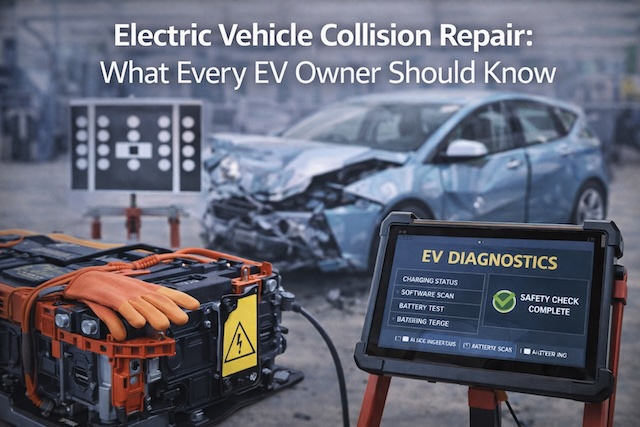
Electric vehicles (EVs) are becoming a common sight on New Jersey roads. While they share many similarities with traditional gas-powered vehicles, collision repair for electric vehicles is fundamentally different in several important ways.
If you own—or are considering—an electric vehicle, understanding how EV collision repair works can help you make informed decisions after an accident and ensure your vehicle is repaired safely and correctly.
Why Electric Vehicle Collision Repair Is Different
Electric vehicles are built around high-voltage battery systems, specialized materials, and advanced electronics. These components require specific training, tools, and procedures when repairs are needed.
Some of the key differences include:
- High-voltage battery packs integrated into the vehicle structure
- Specialized cooling systems
- Unique structural designs
- Increased reliance on sensors and software
Because of this, EV repairs are not simply “collision repair as usual.”
High-Voltage Battery Safety Comes First
One of the most critical aspects of electric vehicle collision repair is battery safety.
After a collision, even a seemingly minor one, an EV battery may be:
- Damaged internally
- Compromised at connection points
- At risk for delayed thermal events
Proper repair procedures often require:
- High-voltage system shutdowns
- Insulation and safety protocols
- Battery inspection or removal
- Manufacturer-approved diagnostic scans
These steps are essential for both technician safety and vehicle owner peace of mind.
Not Every Body Shop Is Equipped to Repair EVs
Electric vehicle repairs often require:
- Specialized technician training
- Dedicated work areas
- Manufacturer repair information
- OEM-approved tools and equipment
Choosing a repair facility familiar with electric vehicle collision repair helps ensure that repairs are completed according to manufacturer guidelines—not shortcuts.
Structural Repairs Matter More Than Ever
Many electric vehicles use:
- Aluminum
- Ultra-high-strength steel
- Composite materials
These materials behave differently than traditional steel and often require specific repair or replacement methods. Improper structural repairs can affect crash performance, battery protection, and long-term durability.
ADAS and EVs Go Hand in Hand
Most electric vehicles are equipped with advanced driver assistance systems (ADAS), including:
- Automatic emergency braking
- Lane-keeping assistance
- Adaptive cruise control
- Pedestrian detection
After a collision—or even after bumper, windshield, or suspension repairs—ADAS calibrations are often required to ensure these systems function properly.
A repaired EV isn’t truly repaired unless its safety systems are verified and calibrated as needed.
Charging, Cooling, and Software Checks
Electric vehicle collision repair often includes checks that gas vehicles don’t require, such as:
- Battery cooling system inspection
- Charging port and cable integrity checks
- Software updates or resets
- Post-repair diagnostic scans
These steps help confirm that the vehicle operates as intended after repairs are complete.
What This Means for EV Owners
If your electric vehicle is involved in a collision, it’s reasonable to ask:
- Does this shop have experience repairing EVs?
- Are manufacturer repair procedures being followed?
- Were high-voltage safety protocols used?
- Are ADAS calibrations required?
- Will post-repair diagnostics be documented?
Clear communication helps ensure your EV is restored safely—not just cosmetically.
Helpful External Resources
The following authoritative sources provide additional education and reinforce the information above:
- National Highway Traffic Safety Administration – Electric vehicle safety and battery considerations
https://www.nhtsa.gov/road-safety/electric-vehicle-safety - Insurance Institute for Highway Safety – EV crash safety and structural design research
https://www.iihs.org/topics/electric-vehicles - Consumer Reports – EV ownership, safety, and repair considerations
https://www.consumerreports.org/cars/electric-vehicles/ - Society of Collision Repair Specialists – Industry guidance on advanced vehicle repairs
https://scrs.com