
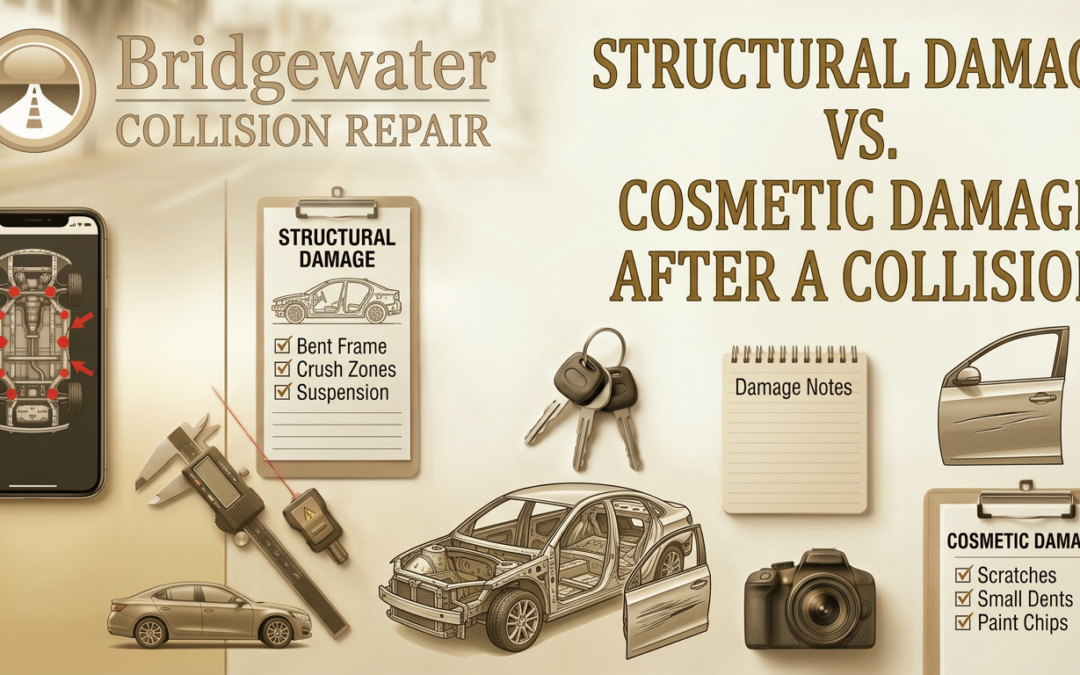
Two vehicles can look nearly identical after a collision and have very different damage underneath. One may have sustained surface-level cosmetic damage that requires straightforward bodywork and refinishing. The other may have sustained structural damage that affects the vehicle’s integrity, safety performance, and long-term handling. The difference is not always visible from the outside, which is one reason professional inspection matters after any significant impact.
This article explains what each type of damage involves, why you cannot always distinguish them visually, and how structural damage is properly diagnosed and repaired.
What Counts as Cosmetic Damage?
Cosmetic damage refers to damage that affects the vehicle’s appearance but does not compromise its structural integrity or the function of its safety systems. Scratches, surface dents, paint damage, scuffed bumper covers, and broken trim pieces fall into this category when they are confined to the outer surfaces of the vehicle without affecting the components beneath.
Cosmetic repairs typically involve paintless dent removal for small dents where the paint is intact, traditional bodywork and refinishing for larger dents or damaged panels, bumper cover repair or replacement, and trim restoration or replacement. These repairs restore the vehicle’s appearance and, when done correctly, return it to pre-accident condition cosmetically. They do not involve structural measurement systems, frame straightening equipment, or recalibration of electronic systems unless those systems were also affected.
What Counts as Structural Damage?
Structural damage refers to deformation or displacement in the vehicle’s load-bearing components. For most passenger vehicles, which use unibody construction, this means the integrated frame rails, rocker panels, pillars, firewall, floor pan, and rear structure that form a single continuous unit. For body-on-frame vehicles such as full-size trucks, the structural frame is a separate chassis component beneath the body.
Structural damage affects how the vehicle performs in a subsequent collision. Modern vehicles are engineered with precisely designed crumple zones that absorb and redirect crash energy to protect occupants. When those zones are deformed in a previous accident and not properly restored, they may not perform as designed in a future impact. Structural damage can also affect alignment geometry, which influences handling, tire wear, and the vehicle’s ability to track straight. The article Understanding Auto Body Frame Restoration explains the repair process in more detail.
Why Can’t You Always Tell the Difference Visually?
Modern vehicle construction is designed to distribute and absorb impact forces efficiently. This means that a collision’s energy can travel through the vehicle’s structure and cause deformation in areas that have no visible surface damage. A rear impact, for example, may deform the rear frame rails in a way that does not produce visible damage to the bumper cover or rear fascia, particularly at lower speeds where the energy absorber and reinforcement bar absorbed the visible portion of the impact.
Force transfer is the key concept. In a unibody vehicle, an impact at one corner can shift structural geometry at the opposite end of the vehicle. The suspension mounting points, door openings, and roof structure can all be affected by an impact that seemed to involve only one area. This is why a visual inspection of the damage area is not sufficient to assess structural integrity after a significant collision. The Hidden Damage After an Accident article covers how technicians identify damage that isn’t visible from outside the vehicle.
How Is Structural Damage Diagnosed?
Structural damage is diagnosed through computerized measurement systems that compare the vehicle’s actual dimensions against the manufacturer’s specifications for that model. These systems use measuring points established by the manufacturer across the underbody, suspension mounting locations, and body structure. Any deviation from specification indicates deformation that requires correction.
A pre-scan diagnostic, performed before repairs begin, also captures fault codes from the vehicle’s electronic modules that may indicate sensor displacement or system concerns caused by the impact. Structural repairs require specialized equipment including frame straightening systems with computerized pull measurement, which allow technicians to restore dimensions precisely rather than by estimation. For vehicles with advanced safety systems, a post-scan after repairs confirms that the structure’s restoration has returned the vehicle to proper operating parameters.
Does Structural Damage Mean the Car Is Totaled?
Not necessarily. Structural damage is repairable in most cases when the shop has the proper equipment, training, and access to manufacturer repair documentation. The determination of whether a vehicle is a total loss is based on the cost of repairs relative to the vehicle’s actual cash value, not solely on the type of damage sustained. A vehicle with significant structural damage may still be repairable and worth repairing if its value supports the cost.
What matters is that the structural repair is performed correctly, using measurement systems and procedures that restore the vehicle to manufacturer specifications. A vehicle that appears to drive normally after an informal structural repair may still carry dimensional deviations that affect safety performance and handling over time. The article Total Loss vs. Salvage Title covers how insurers make the total loss determination and what it means for the vehicle going forward.
How Does Damage Type Affect Your Insurance Claim?
Structural repairs typically involve more diagnostic steps, more disassembly, and more documentation than cosmetic repairs. This often means the repair process includes supplemental estimates as additional damage is identified during disassembly, which is a normal part of the structural repair process rather than an unexpected complication. Proper documentation from your repair facility supports these supplements and keeps the claim moving without unnecessary delays. For context on how the broader claims process works, the Auto Body Repair Estimate Differences article explains what drives variation between estimates and what that means for your situation.
Schedule an Assessment at Bridgewater Collision Repair
If you are unsure whether your vehicle sustained structural damage in a collision, a professional inspection is the most reliable way to find out. Our team can assess the damage and explain what we find before any work begins. Contact us to schedule an assessment at either our Bridgewater or Glen Gardner/Clinton location.