
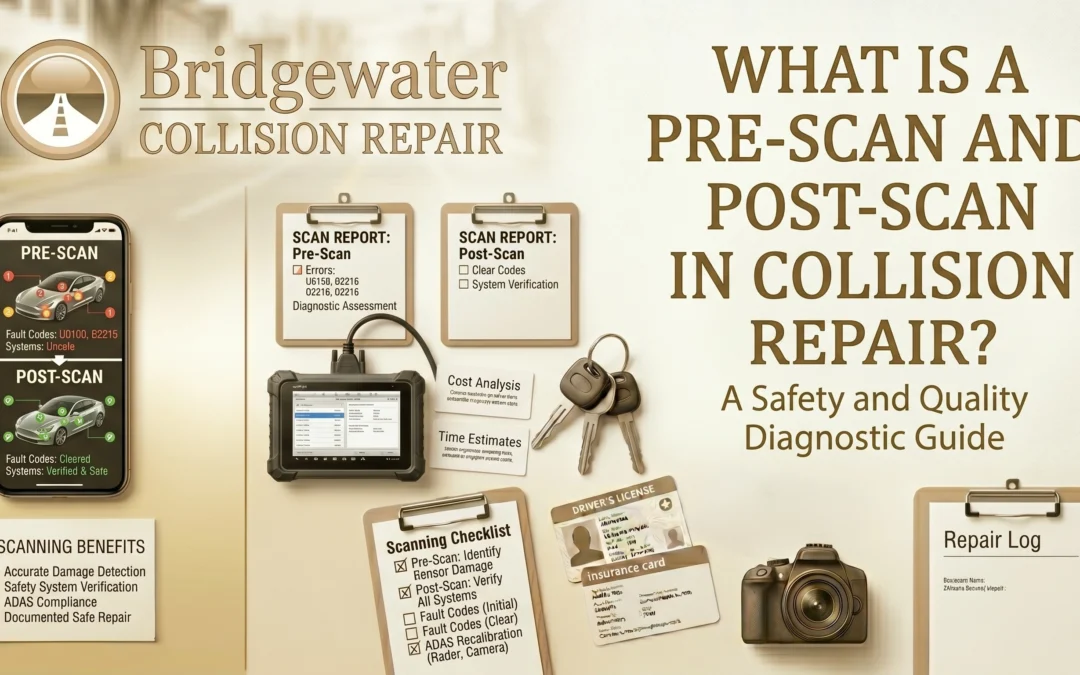
Modern vehicles contain dozens of networked electronic systems, and a collision can affect them in ways that are not visible from the outside. Pre-scans and post-scans are diagnostic procedures that identify those effects before and after repairs are completed. Understanding what each scan does, and why it is required, helps you evaluate whether your vehicle is being properly restored.
What Is a Pre-Scan?
A pre-scan is a diagnostic check performed before any repair work begins. A technician connects a scan tool to the vehicle’s OBD port and retrieves Diagnostic Trouble Codes, commonly called DTCs, stored across all of the vehicle’s onboard control modules. The results establish a baseline record of every system affected by the collision before the shop touches the vehicle.
One important distinction: DTCs can be stored in a vehicle’s systems without triggering a dashboard warning light. A collision may generate fault codes in the airbag system, the ABS module, the stability control system, or an ADAS sensor, none of which produce a visible indicator on the dash. Without a pre-scan, those codes go undetected and the issues behind them go unaddressed.
The pre-scan also protects both the vehicle owner and the repair facility. It documents the condition of the vehicle’s systems at the time it arrived, which matters if questions arise later about what damage was collision-related.
What Is a Post-Scan?
A post-scan is the same diagnostic process performed after all repairs are complete. Its purpose is twofold: to confirm that the fault codes identified in the pre-scan have been resolved, and to verify that no new codes were introduced during the repair process itself.
Repairs involve disassembly, reassembly, welding, parts replacement, and recalibration, any of which can affect electronic systems. The post-scan catches anything that was missed or inadvertently disturbed before the vehicle is returned to the owner. It also serves as formal documentation that the vehicle’s systems were checked and confirmed functional at the conclusion of the repair.
Why Do Vehicle Manufacturers Require Scanning?
Multiple vehicle manufacturers have issued position statements declaring pre- and post-repair scanning a required step in the collision repair process. Honda, Nissan, Toyota, GM, and others have each stated that scanning collision-damaged vehicles is critical to a proper repair. These requirements exist because manufacturers design vehicles with integrated safety systems that cannot be fully evaluated through visual inspection alone.
For shops that hold OEM certifications, scanning is not optional. It is a condition of certification. Certified facilities follow manufacturer repair procedures on every job, and those procedures include diagnostic scanning at both the start and end of the repair. The Crash Repair Info scanning resource, maintained by the collision repair industry, outlines why scanning is required and what it involves. For more on what happens when repairs deviate from manufacturer procedures, the article What Happens If Your Car Isn’t Repaired to OEM Specifications covers the consequences in detail.
What Can a Pre-Scan Find That a Visual Inspection Misses?
Impact energy in a collision travels through a vehicle’s frame and connected components, often well beyond the visible point of contact. A control module located on the opposite side of the vehicle from the damage can still register a fault code if the collision affected a system it is part of.
Common findings in pre-scans that a visual inspection would not catch include airbag system codes triggered by impact sensors, ABS and stability control codes from wheel speed sensor disruption, lane departure and forward collision warning codes from displaced cameras or radar units, and fault codes in modules that were not near the damaged area at all. These findings shape the repair plan. Addressing them at the start prevents incomplete repairs and avoids surprises at delivery. The Hidden Damage After an Accident article on this blog explains the broader picture of what technicians look for beyond the surface.
Does the Post-Scan Replace ADAS Calibration?
No, and this is a distinction worth understanding. A post-scan identifies whether fault codes remain in the vehicle’s systems after repairs. It does not perform calibration. If a camera, radar sensor, or ultrasonic sensor was displaced or replaced during the repair, calibration is a separate procedure that restores the sensor to its manufacturer-specified operating parameters.
The post-scan confirms whether the calibration was successful by checking for remaining codes, but the two steps serve different functions. Calibration corrects the sensor’s position and performance. The post-scan verifies the result. For a detailed look at when calibration is required and what it involves, the article When Does a Windshield Replacement Require ADAS Calibration provides useful context. The National Highway Traffic Safety Administration also provides background on how driver assistance technologies function and why their accurate operation matters.
Does Insurance Cover Pre- and Post-Scans?
Many insurers now recognize pre- and post-repair scanning as a required part of a complete collision repair and include the cost in claim coverage. Coverage varies by insurer and policy, so it is worth confirming with your adjuster when the claim is opened.
Documentation from both scans supports the claim by providing a clear record of which systems were affected, what actions were taken, and that all fault codes were resolved before the vehicle was returned. This transparency benefits both the vehicle owner and the insurer. For more on how repair documentation factors into the claims process, the Consumer’s Guide to Understanding Collision Repair Estimates is a helpful starting point.
Ready to Have Your Vehicle Properly Assessed?
At Bridgewater Collision Repair, pre-scans and post-scans are part of our standard repair process on every vehicle. We document all fault codes found, the actions taken to resolve them, and the results of the post-repair scan before any vehicle leaves our shop. Our OEM certifications require it, and our customers deserve it.
Contact us to schedule an assessment at either our Bridgewater or Glen Gardner/Clinton location.