
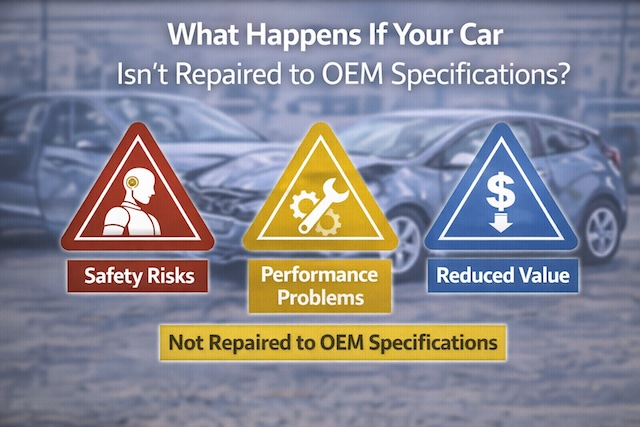
After a collision, most vehicle owners assume that once their car looks “back to normal,” the repair is complete. But modern vehicles are engineered with very specific materials, structures, and systems. When repairs don’t follow OEM (Original Equipment Manufacturer) specifications, problems may not show up right away—but they can surface later in ways that affect safety, performance, and value.
This article explains what OEM specifications are, why they matter, and what can happen when repairs don’t meet those standards.
What Are OEM Specifications?
OEM specifications are the repair procedures and standards created by the vehicle manufacturer. They outline how a vehicle is designed to be repaired after damage, including:
- Which parts must be replaced versus repaired
- Approved materials and fasteners
- Structural repair limits
- Welding, bonding, or riveting methods
- Calibration requirements for safety systems
These procedures are based on extensive engineering, testing, and crash data.
Why OEM Repair Procedures Matter
Vehicle manufacturers design their repair procedures to restore the vehicle as closely as possible to its pre-loss condition. That includes not just appearance, but:
- Structural integrity
- Crash energy management
- Occupant protection
- Proper operation of safety systems
Skipping or altering these procedures can change how a vehicle performs in future collisions—even if the repair looks fine on the surface.
Potential Safety Risks of Non-OEM Repairs
One of the most significant concerns with non-OEM repairs is safety.
If repairs don’t follow manufacturer guidelines:
- Structural components may not absorb crash forces as designed
- Airbags may deploy too early, too late, or not at all
- Advanced Driver Assistance Systems (ADAS) may not function correctly
Organizations like the National Highway Traffic Safety Administration emphasize the importance of proper vehicle repair for occupant protection:
https://www.nhtsa.gov/road-safety
Long-Term Performance and Reliability Issues
Improper repairs can also affect how a vehicle performs over time.
Examples include:
- Premature corrosion due to incorrect materials or coatings
- Alignment issues that affect handling and tire wear
- Electrical or sensor problems caused by improper routing or mounting
These issues may not appear immediately but can lead to ongoing maintenance concerns.
Impact on Vehicle Value and Resale
When a vehicle isn’t repaired to OEM specifications, it can affect resale value in several ways:
- Reduced buyer confidence
- Lower trade-in offers
- Increased scrutiny during inspections
- Documentation gaps that raise red flags
Buyers and dealers often care less about whether a car was repaired and more about how it was repaired.
Warranty and Insurance Considerations
Some manufacturer warranties and extended coverage plans may be affected if repairs don’t meet OEM standards. In addition, if a future claim involves an area that wasn’t repaired correctly, coverage disputes can arise.
Understanding repair quality early helps avoid complications later.
Why Non-OEM Repairs Happen
Repairs may deviate from OEM specifications for several reasons:
- Lack of access to manufacturer repair information
- Inadequate training or equipment
- Cost or time pressures
- Misunderstanding of modern vehicle construction
This is why asking questions and reviewing repair documentation can be important for vehicle owners.
What This Means for Vehicle Owners
You don’t need to be an expert in repair procedures—but you can be informed.
Helpful questions to ask include:
- Were manufacturer repair procedures followed?
- Were any safety systems calibrated after repairs?
- Can documentation be provided showing what was done?
Clear communication helps ensure repairs meet the standards your vehicle was designed to meet.
Helpful External Resources
The following authoritative sources provide additional context and reinforce the importance of proper repairs:
- National Highway Traffic Safety Administration – Vehicle safety and repair considerations
https://www.nhtsa.gov/road-safety - Insurance Institute for Highway Safety – Crash performance and vehicle structure research
https://www.iihs.org - Consumer Reports – Understanding vehicle safety and repair decisions
https://www.consumerreports.org/cars/ - I-CAR – Industry education on proper repair procedures
https://www.i-car.com
Final Thoughts
OEM specifications exist for a reason—they’re based on how your vehicle was engineered to protect you and perform safely. When repairs follow those guidelines, you’re more likely to get predictable performance, reliable safety systems, and long-term peace of mind.
If you have questions about whether your vehicle was repaired to OEM specifications, a qualified collision repair professional can help explain what procedures were required and why they matter—so you can move forward with confidence rather than uncertainty.