
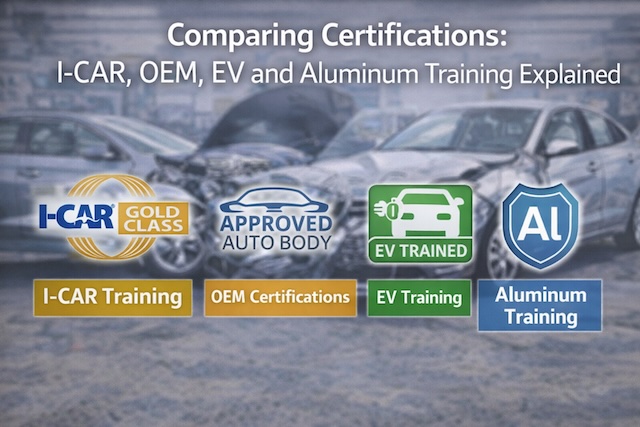
When choosing a collision repair shop, certifications are often mentioned—but not always explained. Terms like I-CAR Gold, OEM certified, EV trained, or aluminum repair capable can sound impressive, yet many vehicle owners aren’t sure what they actually mean.
This guide breaks down collision repair certifications, what each one represents, and how they relate to the quality and safety of your repair—so you can make informed decisions without needing an industry background.
Why Certifications Matter in Collision Repair
Modern vehicles are complex. They include advanced materials, high-voltage systems, and safety technologies that require specific knowledge to repair correctly.
Certifications help indicate that:
- Technicians have received structured training
- Repairs follow recognized procedures
- Ongoing education is part of the repair process
While no single certification tells the whole story, understanding the differences helps put each credential in context.
I-CAR Training: The Foundation of Collision Repair Education
I-CAR (Inter-Industry Conference on Auto Collision Repair) is a nonprofit organization focused on technical education for the collision repair industry.
What I-CAR Training Covers
- Structural repair principles
- Electronics and diagnostics
- Welding and materials
- ADAS awareness
- Repair planning best practices
Many shops pursue I-CAR Gold Class recognition, which indicates that a shop meets ongoing training requirements across key roles.
What this means for vehicle owners:
I-CAR training shows a commitment to continuous education, especially as vehicle technology changes.
Learn more directly from I-CAR:
https://www.i-car.com
OEM Certifications: Manufacturer-Specific Repair Standards
OEM (Original Equipment Manufacturer) certifications are granted by vehicle manufacturers to repair facilities that meet brand-specific requirements.
What OEM Certification Typically Includes
- Manufacturer-approved equipment
- Brand-specific repair procedures
- Required technician training
- Audits or ongoing compliance checks
OEM certifications vary by brand, and a shop may be certified for some manufacturers but not others.
What this means for vehicle owners:
OEM certification indicates that a shop is qualified to repair certain vehicles according to that manufacturer’s guidelines—but it doesn’t automatically apply to all makes and models.
EV Training: Addressing High-Voltage Vehicle Repairs
Electric vehicles introduce additional safety and repair considerations due to their high-voltage battery systems.
EV-Focused Training Often Includes
- High-voltage safety protocols
- Battery handling and inspection
- EV-specific diagnostics
- Cooling and charging system checks
EV training may be part of OEM certification, I-CAR coursework, or separate manufacturer programs.
What this means for vehicle owners:
EV training helps ensure repairs are handled safely—not just for the vehicle, but for technicians and future occupants as well.
For consumer EV safety information, the National Highway Traffic Safety Administration offers helpful resources:
https://www.nhtsa.gov/road-safety/electric-vehicle-safety
Aluminum Repair Training: Specialized Materials, Specialized Skills
Many modern vehicles use aluminum for weight reduction and performance. Aluminum behaves very differently from steel and requires unique repair methods.
Aluminum Training Typically Covers
- Dedicated tools and work areas
- Contamination prevention
- Manufacturer-approved repair or replacement methods
- Specialized welding or bonding techniques
Improper aluminum repair can affect structural integrity and corrosion resistance.
What this means for vehicle owners:
Aluminum training indicates that a shop understands how to repair lightweight materials safely and correctly—not all shops are equipped for this.
How These Certifications Work Together
No single certification guarantees a perfect repair on its own. Instead, certifications should be viewed as complementary:
- I-CAR training supports broad technical knowledge
- OEM certifications provide manufacturer-specific guidance
- EV training addresses high-voltage safety and systems
- Aluminum training ensures proper material handling
The combination—and how consistently training is maintained—matters more than any single label.
What This Means for You as a Vehicle Owner
When reviewing a shop’s certifications, consider asking:
- Which certifications apply to my vehicle?
- How often is training updated?
- Are manufacturer procedures followed for my repair?
- How are advanced safety systems addressed?
Clear answers help turn certifications from buzzwords into meaningful information.
Helpful External Resources
The following authoritative sources provide additional context and reinforce the information above:
- I-CAR – Industry training and education
https://www.i-car.com - National Highway Traffic Safety Administration – Vehicle safety and repair considerations
https://www.nhtsa.gov/road-safety - Insurance Institute for Highway Safety – Vehicle design, materials, and crash research
https://www.iihs.org - Consumer Reports – Understanding vehicle technology and repair decisions
https://www.consumerreports.org/cars/
Final Thoughts
Certifications don’t replace communication—but they do provide insight into a shop’s training, capabilities, and approach to modern vehicle repair.
Understanding collision repair certifications helps you ask better questions, interpret credentials accurately, and feel more confident in the repair decisions you make. If you’re unsure how specific certifications apply to your vehicle, a qualified collision repair professional can help explain what matters most for your situation and why.