
After a car accident, most drivers are focused on getting their vehicle repaired and back on the road. What many don’t realize is that New Jersey has specific consumer protections designed to ensure repairs are handled fairly, transparently, and safely.
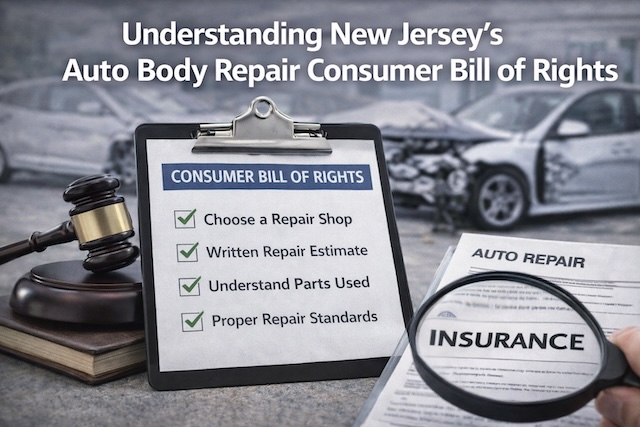
These protections are often referred to as New Jersey’s Auto Body Repair Consumer Bill of Rights. While it isn’t a single document handed out at the scene of an accident, it represents a set of rights established under New Jersey law that every vehicle owner should understand.
This article breaks those rights down in plain language—so you know what to expect, what questions to ask, and how to protect yourself during the repair process.
Your Right to Choose a Repair Shop
One of the most important rights New Jersey drivers have is the right to choose their own auto body repair facility.
Even if your insurance company recommends or works with certain repair shops, you are not required to use a specific location. As long as the shop is properly licensed, the choice is yours.
This matters because different repair facilities may offer:
- Different certifications
- Different equipment and training
- Different approaches to following manufacturer repair procedures
Being informed allows you to choose a shop you’re comfortable with—based on qualifications, trust, and communication.
Your Right to a Written Estimate
Before repairs begin, New Jersey law requires that you receive a written repair estimate.
This estimate should clearly explain:
- The parts being used
- Labor operations
- Estimated costs
- Whether parts are new, used, or reconditioned
You are entitled to review and approve this estimate before work starts. If additional damage is discovered later, the shop must communicate those changes and provide a supplemental estimate.
Your Right to Understand the Parts Being Used
Vehicle owners in New Jersey have the right to know what type of parts are being installed on their vehicle.
This includes:
- Original Equipment Manufacturer (OEM) parts
- Aftermarket parts
- Recycled or reconditioned parts
The estimate should clearly identify the type of parts being used, allowing you to ask informed questions and understand how those choices may affect your vehicle.
Your Right to Proper Repairs
Repairs must be performed in a workmanlike manner, meaning they should meet accepted industry standards and follow applicable manufacturer procedures when required.
Modern vehicles are complex, and proper repairs often involve:
- Structural repair guidelines
- Advanced materials
- Electronic systems and safety features
Understanding this right helps ensure repairs are about restoring safety and function—not just appearance.
Your Right to an Itemized Final Invoice
Once repairs are complete, you are entitled to a final invoice that reflects the actual work performed.
This invoice should:
- Match approved estimates and supplements
- Clearly show labor, parts, and materials
- Be available for your records
Keeping this documentation is important, especially if questions arise later.
Your Right to File a Complaint
If you believe your rights were not respected, New Jersey provides a process for consumers to seek help.
You can contact the New Jersey Department of Banking and Insurance, which oversees insurance practices and consumer protections related to auto claims and repairs.
Why These Rights Matter
The repair process can feel overwhelming—especially after an accident. These consumer protections exist to create transparency, accountability, and fairness.
Understanding your rights helps you:
- Ask better questions
- Avoid confusion or misunderstandings
- Make informed decisions about your vehicle
- Feel more confident throughout the repair process
What This Means for You
You don’t need to memorize New Jersey law to protect yourself—but knowing the basics makes a real difference.
If something feels unclear during the repair process, it’s appropriate to pause, ask questions, and seek clarification. A qualified collision repair professional should be able to explain your options and help you understand how your rights apply to your specific situation.
Helpful External Resources
The following authoritative sources provide additional consumer guidance and reinforce the information above:
- New Jersey Department of Banking and Insurance – Consumer protections and insurance oversight
https://www.nj.gov/dobi/ - New Jersey Division of Consumer Affairs – Auto repair regulations and consumer rights
https://www.njconsumeraffairs.gov - National Highway Traffic Safety Administration – Vehicle safety systems and repair considerations
https://www.nhtsa.gov/road-safety - Insurance Institute for Highway Safety – Independent research on vehicle safety and repairs
https://www.iihs.org