
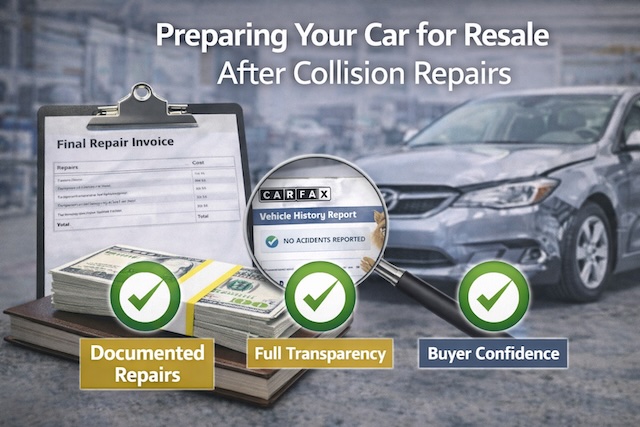
If your vehicle has been in an accident, selling or trading it later doesn’t have to be stressful. With the right preparation, many drivers can protect resale value, reduce buyer concerns, and avoid last-minute surprises.
This guide explains how to prepare your car for resale after collision repairs—what matters most to buyers, what documentation helps, and how to present your vehicle with confidence.
Start With Complete Repair Documentation
Buyers and dealers care less about whether a vehicle was repaired and more about how well it was repaired.
Helpful documents include:
- The final repair invoice
- Itemized repair estimates and supplements
- Proof that manufacturer repair procedures were followed
- Calibration or diagnostic scan reports (if applicable)
Having organized records shows transparency and builds trust.
Confirm All Safety Systems Are Working Properly
Modern vehicles rely heavily on technology. After collision repairs, it’s important to confirm that safety systems are functioning as intended.
This may include:
- Advanced Driver Assistance Systems (ADAS)
- Cameras and radar sensors
- Warning lights and alerts
- Post-repair diagnostic scans
Even if a system appears to work, documentation that it was inspected or calibrated can reassure potential buyers.
For more on how these systems affect safety, the National Highway Traffic Safety Administration provides consumer education on vehicle safety technology:
https://www.nhtsa.gov/road-safety
Address Cosmetic Details Buyers Notice First
First impressions matter—especially when resale is involved.
Before listing your vehicle:
- Repair or touch up visible paint imperfections
- Ensure panels are properly aligned
- Replace broken trim or missing fasteners
- Clean headlights and exterior lenses
A professional detailing can also improve presentation and perceived value at a relatively modest cost.
Understand Vehicle History Reports
Many buyers will check a vehicle history report before making a decision. These reports may note:
- Accident history
- Insurance claims
- Structural or airbag deployment indicators
While you can’t control what appears on a report, you can control how you respond:
- Be upfront about repairs
- Provide documentation showing professional, complete repairs
- Explain that repairs were completed properly—not hidden
The Consumer Reports offers helpful guidance on how buyers use vehicle history reports:
https://www.consumerreports.org/cars/buying-a-car/
Consider a Pre-Sale Inspection
A pre-sale inspection can identify:
- Loose trim
- Alignment issues
- Warning lights
- Wear items that could raise buyer questions
Addressing small concerns early can prevent renegotiations later.
Be Honest—Transparency Builds Value
Trying to conceal past damage often backfires. Buyers who discover undisclosed repairs may:
- Walk away
- Demand a steep price reduction
- Lose confidence in the transaction
Clear explanations and proper paperwork often matter more than a “perfect” history.
What This Means for New Jersey Sellers
New Jersey buyers are well-informed and often cautious. Preparing your car properly after collision repairs helps:
- Reduce buyer hesitation
- Support asking price
- Improve trade-in evaluations
- Speed up the selling process
If you’re unsure what documentation or inspections make sense for your situation, professional guidance can help clarify next steps.
Helpful External Resources
These authoritative sources add context and credibility without competing with collision repair services:
- National Highway Traffic Safety Administration – Vehicle safety systems and inspections
https://www.nhtsa.gov/road-safety - Consumer Reports – Resale value, inspections, and vehicle history reports
https://www.consumerreports.org/cars/ - Insurance Institute for Highway Safety – Crash repair implications and vehicle safety design
https://www.iihs.org - New Jersey Motor Vehicle Commission – Title and ownership considerations
https://www.nj.gov/mvc/
Final Thoughts
Preparing your car for resale after collision repairs isn’t about hiding the past—it’s about demonstrating quality, safety, and transparency.
When buyers understand what was repaired and why, and can see that it was done correctly, confidence increases—and so does the likelihood of a smoother sale. If questions come up along the way, a qualified collision repair professional can help explain repair documentation and what buyers typically look for, helping you move forward with clarity and confidence.