
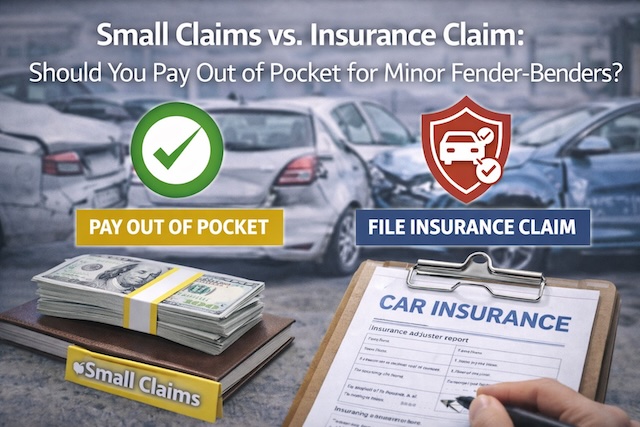
A low-speed fender-bender can leave drivers with a tough decision: file an insurance claim or pay out of pocket. There’s no single right answer. The best choice depends on the damage, the costs involved, and how each option could affect you long term.
This guide explains the pros and cons of small claims vs. insurance claims, with specific considerations for New Jersey drivers—so you can make a confident, informed decision.
What Counts as a “Minor” Fender-Bender?
A minor fender-bender typically involves:
- Light bumper or trim damage
- Scratches, scuffs, or small dents
- No obvious structural damage
- No airbag deployment
- No injuries
That said, modern vehicles often hide damage behind the bumper. Sensors, brackets, and mounts can be affected even when the exterior looks fine—so an inspection matters before deciding.
Option 1: Paying Out of Pocket (Small Claim / No Insurance Claim)
Paying out of pocket means you handle the repair costs directly with the repair facility (and possibly the other driver), without opening an insurance claim.
When Paying Out of Pocket Can Make Sense
- The repair cost is close to or below your deductible
- You want to avoid a potential premium increase
- The damage is limited and well understood
- Both parties agree on responsibility and payment
Potential Advantages
- No claim on your insurance record
- Faster resolution in some cases
- Avoids paying a deductible
Potential Risks
- Hidden damage may increase the final cost
- No insurance backing if disputes arise
- You’re responsible for the full bill if costs grow
- No claim documentation if issues appear later
Before choosing this route, it’s wise to get a professional inspection to understand the true scope of damage.
Option 2: Filing an Insurance Claim
Filing a claim means your insurer becomes involved in the repair process according to your policy terms.
When an Insurance Claim Often Makes Sense
- Damage is near or above your deductible
- ADAS, sensors, or structural components may be involved
- You want repairs documented through your policy
- The other driver is at fault and their insurer is involved
Potential Advantages
- Financial protection if costs increase
- Repairs are documented and supported by the policy
- Dispute resolution assistance
- Coverage for related items like rental cars (depending on your policy)
Potential Considerations
- You may owe a deductible
- Claims can affect premiums over time
- The process may take longer
The Hidden Cost Factor Many Drivers Miss
Modern vehicles are packed with technology. Even a light impact can affect:
- Parking sensors
- Blind-spot monitors
- Radar units
- Camera mounts
These issues may not be obvious immediately—but they can significantly change repair costs. This is why deciding before a proper inspection can be risky.
What About “Small Claims Court”?
Small claims court is sometimes mentioned in minor accidents involving disputes between drivers. However, it’s usually a last resort and not a substitute for understanding repair costs.
For New Jersey drivers, small claims court has specific limits and procedures, which you can review through the New Jersey Courts.
Helpful resource:
https://www.njcourts.gov/self-help/small-claims
Questions to Ask Before Deciding
Before choosing small claims vs. an insurance claim, consider asking:
- What is the full estimated cost, including hidden damage?
- How does this compare to my deductible?
- Are safety systems involved?
- Will this affect resale value?
- What protections do I want if problems arise later?
A clear estimate often makes the decision much easier.
What This Means for New Jersey Drivers
New Jersey allows drivers flexibility—but also places importance on proper repairs and documentation. If you’re unsure, getting professional guidance before deciding can prevent surprises.
For general insurance guidance and consumer protections, the New Jersey Department of Banking and Insurance offers helpful resources:
https://www.nj.gov/dobi/
Helpful External Resources
These sources add context and credibility without competing with collision repair services:
- New Jersey Department of Banking and Insurance – Insurance claims and consumer rights
https://www.nj.gov/dobi/ - New Jersey Courts – Small claims court information
https://www.njcourts.gov/self-help/small-claims - Consumer Reports – Understanding deductibles and insurance decisions
https://www.consumerreports.org/cars/car-insurance/ - National Highway Traffic Safety Administration – Vehicle safety systems and post-crash considerations
https://www.nhtsa.gov/road-safety