
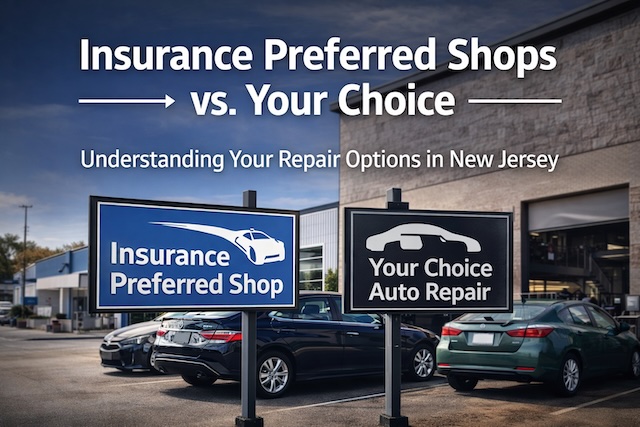
Understanding Repair Options in NJ
When your car needs collision repairs, your insurer may suggest a “preferred” body shop. These direct‑repair programs (DRPs) are designed to streamline the claims process and often offer convenience and warranty support. At the same time, New Jersey drivers have the right to have their vehicle repaired at any licensed facility. As a collision center that is both independently certified and part of several DRP networks, Bridgewater Collision & Repair wants to help you understand your options so you can choose the path that fits your needs.
Why insurers recommend certain shops
Many insurance companies maintain networks of repair facilities that meet agreed‑upon standards for equipment, training and pricing. These DRP shops work closely with adjusters to produce quick estimates and expedite approvals. Because the insurer stands behind the quality of work performed, DRPs can be convenient for customers who want the claim handled with minimal back‑and‑forth. In addition, insurers may have negotiated labor rates and parts pricing that help control costs. Bridgewater Collision participates in several DRP programs, and we take pride in meeting both the insurer’s requirements and manufacturer repair standards.
Your right to choose any licensed repair facility
New Jersey law protects your freedom of choice. According to the New Jersey Department of Banking & Insurance, you may select any licensed repair shop for your collision repairs. Your insurer must attempt to reach an “agreed price” with the shop you choosenj.gov. If they cannot agree, they are obligated to provide names of shops that will complete the repairs for the price the insurer is willing to paynj.gov. You may also ask your insurer to recommend a facility; if you do, the insurer must suggest a qualified shop convenient to you and guarantee the worknj.gov.
Choosing OEM or aftermarket parts
Insurance contracts only require your vehicle to be restored to its pre‑loss condition; insurers may therefore specify aftermarket parts when they are of like kind and quality. However, you are not required to accept non‑OEM components. Regulations allow you to insist on OEM parts and pay the price differencenj.gov. The insurer must clearly identify any aftermarket parts in writing and cover necessary modificationsnj.gov. Whether you choose a DRP shop or an independent facility, ask which parts will be used and why.
Weighing the pros and cons
Because Bridgewater Collision & Repair operates both as an independent shop and a DRP partner, we see the benefits of each approach.
- Convenience and speed: DRP shops often receive approvals faster because adjusters already trust their processes. This can get your car back on the road sooner.
- Guaranteed work: If you ask your insurer for a recommendation, they must suggest a qualified facility and stand behind the workmanshipnj.gov.
- Manufacturer certifications: Independent certified shops may offer specialized training and equipment for your vehicle’s brand, ensuring repairs follow OEM procedures. Many DRP facilities are also OEM‑certified, as Bridgewater Collision is.
- Advocacy for OEM parts: Independent shops may be more willing to specify OEM parts and negotiate with insurers. DRP agreements set pricing guidelines, but consumers can still choose OEM parts by covering any difference.
Factors to consider when choosing a shop
- Certifications and training: Look for I‑CAR Gold Class, ASE and manufacturer certifications. These indicate technicians are trained to follow OEM repair procedures. Bridgewater Collision holds multiple OEM certifications for makes like Honda, Acura and Subaru.
- Facilities and equipment: Advanced alignment machines, frame straightening systems and ADAS calibration tools are essential for modern repairs. Ask to see the shop’s equipment.
- Communication: A trustworthy shop will explain the estimate, list parts used and provide updates. Whether you choose a DRP or independent shop, transparency is key.
- Warranties: Inquire about written warranties and how long they last. Some DRP programs include lifetime warranties supported by the insurer.
- Location and convenience: Proximity matters when dropping off and picking up your car. Insurers must recommend a shop convenient to your vehicle’s locationnj.gov.
What this means for you
- If your insurer recommends a shop, remember this is an option — not a requirement. Evaluate their suggestion alongside other qualified facilities.
- If you have a preferred shop, tell your adjuster. They are required to attempt to agree on a fair pricenj.gov.
- Ask about parts: you can insist on OEM components and pay any differencenj.gov.
- Look for certifications, modern equipment and positive reviews. These matter more than whether the shop participates in a DRP.
- Keep all documentation, including written estimates and repair orders, for your records.
A final word
Navigating the repair process can feel daunting, especially when insurers make strong recommendations. Whether you choose a DRP facility or an independent certified shop, the most important thing is that your vehicle is repaired safely and correctly. Bridgewater Collision & Repair values its relationships with insurers and remains committed to following manufacturer repair procedures on every job. If you have questions about your options after an accident, a qualified collision repair professional can help explain the pros and cons and guide you toward the right decision.